Monthly Archives

August 2025

Mountain Water Decaf Process

The Mountain Water Decaff Process: Pure, Flavourful and Chemical-Free

By Blog Posts No Comments

For many coffee drinkers, the idea of decaf can feel like a compromise. Too often, decaffeinated coffee is associated with a flat taste and the loss of the unique character that makes coffee so enjoyable. But with the Mountain Water Decaffeination Process, that stereotype no longer holds true. This innovative, chemical-free method ensures you can enjoy all the flavour of your favourite beans without the caffeine.

What Is the Mountain Water Process?

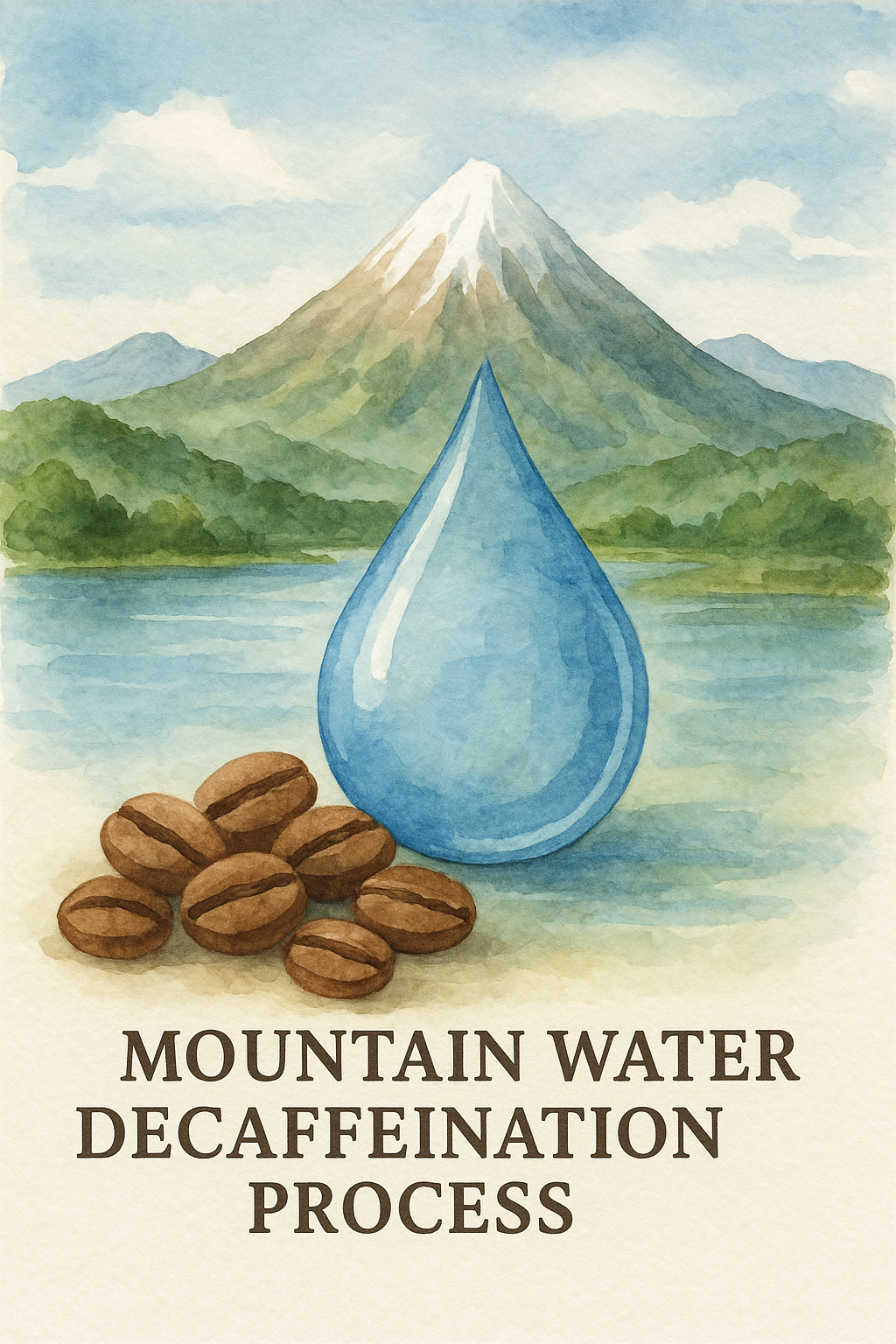
The Mountain Water Decaffeination Process (MWP) is a natural and environmentally friendly method developed in Mexico. It is carried out exclusively at the Descamex facility in Veracruz, using crystal-clear glacier water from Pico de Orizaba, Mexico’s tallest mountain. This pure mountain water is the foundation of the process, which gently removes caffeine while preserving the bean’s essential oils, sugars and flavours.

Unlike traditional decaffeination methods that rely on chemical solvents such as methylene chloride or ethyl acetate, Mountain Water uses nothing but water, temperature and advanced filtration. This ensures the result is a 100% chemical-free decaf coffee that stays true to its origin.

How Does It Work?

The process is both simple and precise:

  1. Soaking the Beans – Green coffee beans are immersed in hot water. This draws out the caffeine, along with some of the soluble flavour compounds.

  2. Filtering the Caffeine – The caffeine-rich water is passed through a special carbon filter that selectively traps caffeine molecules while leaving behind the flavour compounds.

  3. Re-Infusion – The beans are then re-immersed in this flavour-saturated, caffeine-free water. Because the liquid already contains the bean’s natural flavours, only caffeine is extracted further, while the original profile is preserved.

  4. Drying – Finally, the beans are carefully dried to their ideal moisture content, ready for roasting.

The result is green coffee that is 99.9% caffeine-free, yet still retains the richness, aroma and complexity of its caffeinated counterpart.

Why Choose Mountain Water Decaf?

There are many reasons both roasters and coffee drinkers prefer Mountain Water decaf:

  • Chemical-Free – No solvents or additives are used at any point.

  • Flavour Preservation – By re-infusing beans in their own flavour-charged water, the process ensures a cup that tastes like “real coffee,” not a muted decaf.

  • Sustainability – Using pure mountain water and advanced filtration makes this a natural and eco-conscious choice.

  • Versatility – Whether you prefer espresso, cafetière or pour-over, Mountain Water decaf performs beautifully across brew methods.

Mountain Water vs. Swiss Water

You may have heard of the Swiss Water Process, another water-based decaffeination method. Both are chemical-free and focused on flavour preservation. The key difference is location: Swiss Water is produced in Canada, while Mountain Water is produced in Mexico using local glacier water. Many roasters find Mountain Water decafs to be slightly sweeter and fuller-bodied, making them a popular choice for balanced, flavourful decaf offerings.

A Fresh Take on Decaf

With the Mountain Water Decaffeination Process, decaf no longer means sacrificing taste. You can enjoy the rich caramel, nutty, fruity or chocolatey notes of your favourite beans—just without the caffeine.

So if you are sensitive to caffeine, or simply want to enjoy a delicious cup later in the day, Mountain Water Decaf coffee offers the perfect solution: natural, sustainable and bursting with flavour.
History of Farrer's

The History of Farrer’s Tea & Coffee House

By Blog Posts No Comments

A Brew Through Time: The History of Farrer’s Tea & Coffee House

Nestled in the heart of the picturesque market town of Kendal, Farrer’s Tea & Coffee House is more than just a café—it’s a living, breathing part of Cumbrian history. For over two centuries, the aroma of fine loose-leaf teas and artisan-roasted coffee has wafted through its charming 17th-century building, inviting locals and visitors alike to pause, sip, and soak in a story that spans generations.

In this blog, we take you on a journey through the rich history of Farrer’s, tracing its roots from a humble merchant business to a beloved institution of British tea and coffee culture.


Origins: From Merchant House to Coffee Legacy

The history of Farrer’s begins in a building steeped in history long before a single coffee bean was ever roasted within its walls. Built in 1637, the property at 13 Stricklandgate first served as a residence for George and Mary Wilson. By the 1670s, it had transformed into The Wagon and Horses Inn, a packhorse rest stop for travellers passing through bustling Kendal—known as the gateway to the Lake District.

In the early 1800s, entrepreneur Joseph Fallows started trading tea, coffee, cocoa, and refined sugar on the premises. But it was in 1819 that the story truly began to brew, when John Farrer, a Quaker from Grayrigg, purchased the business and established what would become Farrer’s Tea & Coffee House.


The Quaker Roots and Family Business

The Farrer family, like many early Lakeland business people, were devout Quakers—known for their integrity and community values. John Farrer and his wife Ann raised their sons to respect tradition and hard work. Their son, John Farrer II, joined the family business and later handed it down not to his daughters, but to his nephews Joseph and Edward, continuing the Farrer legacy in line with Victorian-era business customs.

For decades, the business remained in the extended Farrer family before eventually passing to the Watson family and then on to independent ownership in the 1900s. Yet, throughout all the changes, the shop’s core mission—to provide high-quality teas and coffees—remained unchanged.


A Building with Timeless Character

Step inside Farrer’s today and you’ll instantly feel its historic charm. The 17th-century oak floorboards, which once formed the decks of merchant clipper ships, still creak underfoot. Dozens of people walk these planks every day, and yet they are as sturdy and full of character as ever.

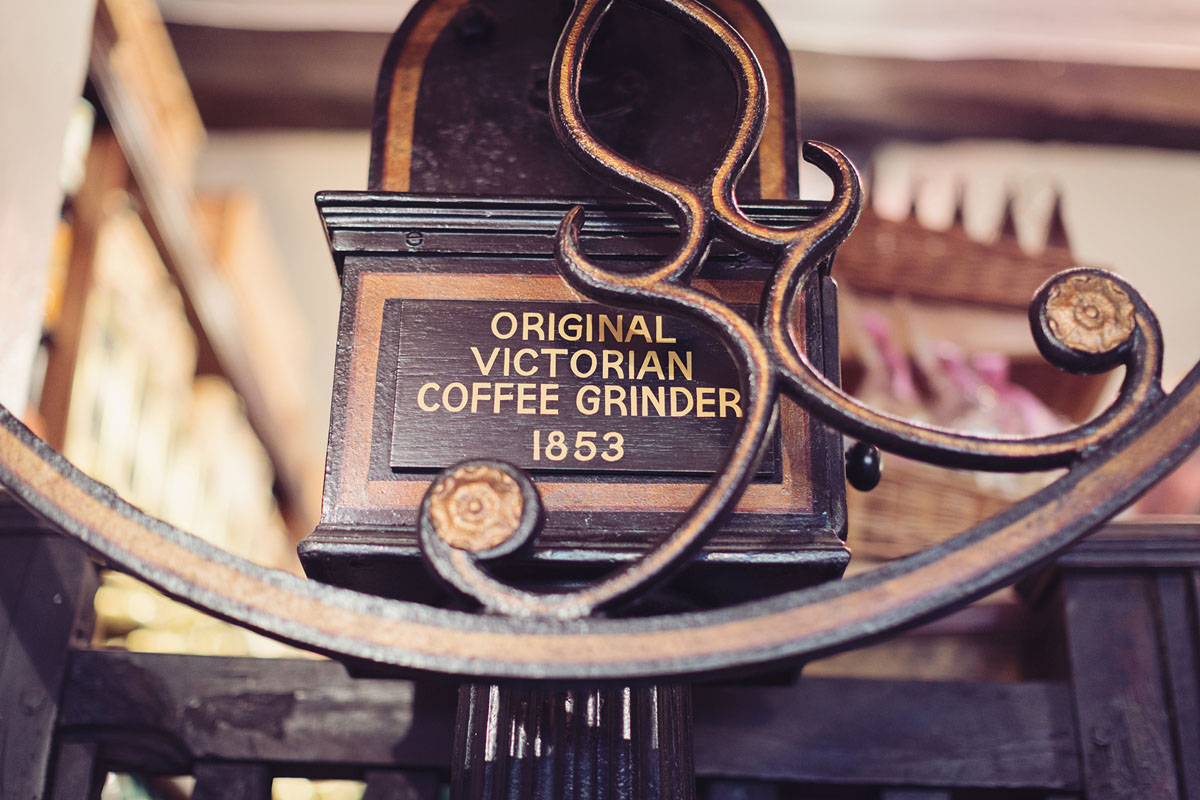
One of the most iconic features of the building is the massive tea counter just inside the entrance. Behind it sit 20 original Victorian brass tea canisters, all still in use and protected as listed features. The stunning Victorian coffee grinder, dated 1853, stands proudly in the centre of the shop—a reminder of the days when coffee roasting required both muscle and patience.

In fact, the entire building was designated a Grade II listed property in 1951, largely due to its incredibly preserved interior. With original staircases, panelled counters, fireplaces (including one dated 1644), and vintage doors, every detail whispers of centuries gone by.


Personal Stories That Shaped the History of Farrer’s

The history of Farrer’s is not just about bricks, tea, and coffee—it’s also about the people who shaped its legacy and these people are honoured on the walls of our shop.

Charles Ernest Travis: A Devoted Tea Maker Turned Soldier

Born in Kendal in 1889, Charles Ernest Travis started work at Farrer’s as a tea maker before enlisting in the Border Regiment during World War I. Known for his cheerfulness even amid the horrors of war, Charles was tragically killed at age 27 on the Somme in 1916. His sacrifice is commemorated by a copper plaque in his honour at Farrer’s and on the memorial at St. Oswald’s Church.

Jack Ferguson: The Brave RAF Flight Engineer

Another poignant story is that of Jack Ferguson, who began working at Farrer’s at the age of 14. At 18, he volunteered for the RAF during World War II, becoming a Flight Engineer. On April 18th, 1944, his plane was tragically shot down upon returning from a bombing mission over France. Jack’s bravery and sacrifice are a deeply respected part of Farrers’ history. His remains were found in 1995 and now form part of a museum exhibit in Witchford.


Modern Day Farrer’s: A New Chapter with Old Traditions

In 1990, Farrers began a new chapter when it was purchased by the Grace family, who continue to run the business today. Now in its second generation, Farrer’s Tea & Coffee House has grown into a bustling café and shop that still honours its historic roots.

Visitors can enjoy a wide variety of freshly prepared cakes, pastries, and light meals, all paired with the finest teas and coffees sourced from around the world. The business also stocks a broad range of loose-leaf teas, roasted coffee, and an impressive collection of tea and coffee-making accessories.

Meanwhile, the John Farrer & Co. roastery remains based in Kendal, continuing the tradition of artisan coffee roasting that began over 200 years ago. Their products are now supplied not just to the café, but to establishments across the Lake District and beyond.


Why the History of Farrer’s Matters

So why does the history of Farrer’s matter? Because it’s a rare example of how tradition and quality can endure the test of time. It’s a place where the past isn’t hidden away in a museum—it’s lived every single day, in the creak of the floorboards, the clink of a brass tea canister, and the aroma of a freshly brewed cup.

Farrer’s Tea & Coffee House isn’t just a spot for a drink—it’s a destination for those who value craftsmanship, heritage, and a story that’s still being written with every customer who walks through its historic doors.


Visit and Be Part of the Legacy

Whether you’re a tea connoisseur, a coffee aficionado, or a history lover, a visit to Farrer’s is a must when in Kendal or the Lake District. Sit in the same rooms where generations of Cumbrians have sipped and savoured, and become part of the enduring history of Farrer’s.

After all, what better way to experience history than with a warm cup of tradition in your hands?